Wagon Lit Uniform
The Wagon Lit Uniform, the standard brown uniform of the Compagnie Internationale des Wagons Lits sleeping-car attendants, becomes a central object in the investigation of Ratchett's murder. It is not merely a piece of clothing but a deliberate prop in an elaborate conspiracy, designed to mislead investigators into believing the crime was committed by an unknown intruder disguised as a conductor. Its discovery, and the circumstances surrounding it, ultimately unravel the carefully constructed alibis of the twelve passengers who have taken justice into their own hands.
Role in the Conspiracy and Initial Deception
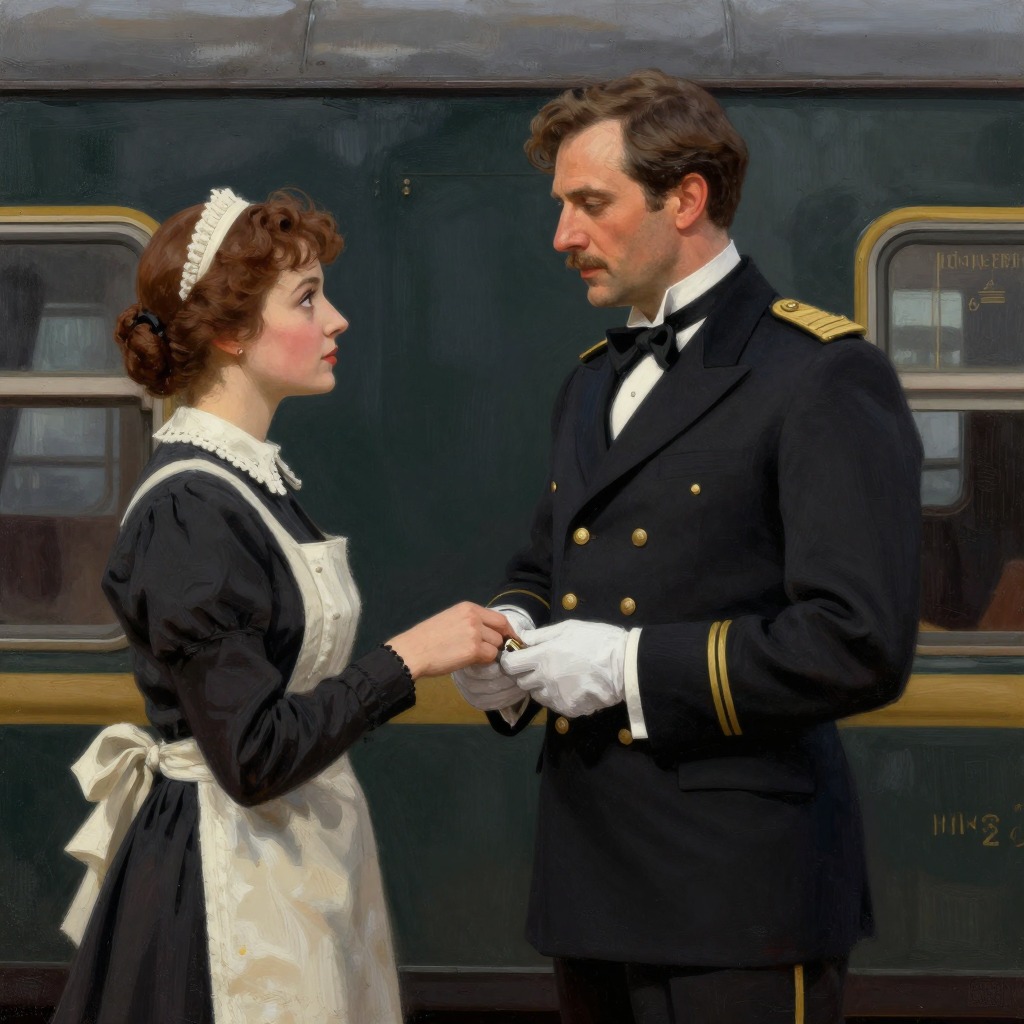
The uniform was integral to the conspirators' original plan, which was conceived to make the murder appear to be an outside job. The intention was that a person dressed as a Wagon Lit conductor would be seen by passengers, and the uniform would later be discarded in a conspicuous place, such as a toilet, to suggest how the killer had infiltrated the train. This would have directed suspicion away from the passengers themselves. The plan was set in motion when the train stopped at Vincovci, the last station before the snowdrift. During this halt, the real conductor, Pierre Michel, was on the platform, leaving the corridor momentarily unguarded. It was then that one of the conspirators, wearing the purloined uniform, could have entered Ratchett's compartment. The uniform was also equipped with a conductor's pass-key, found in its pocket, which explained how the wearer could have unlocked the doors to Ratchett's compartment and the communicating door to Mrs. Hubbard's, bypassing the locks and chains that seemed to create a locked-room mystery.
Discovery and Its Immediate Consequences
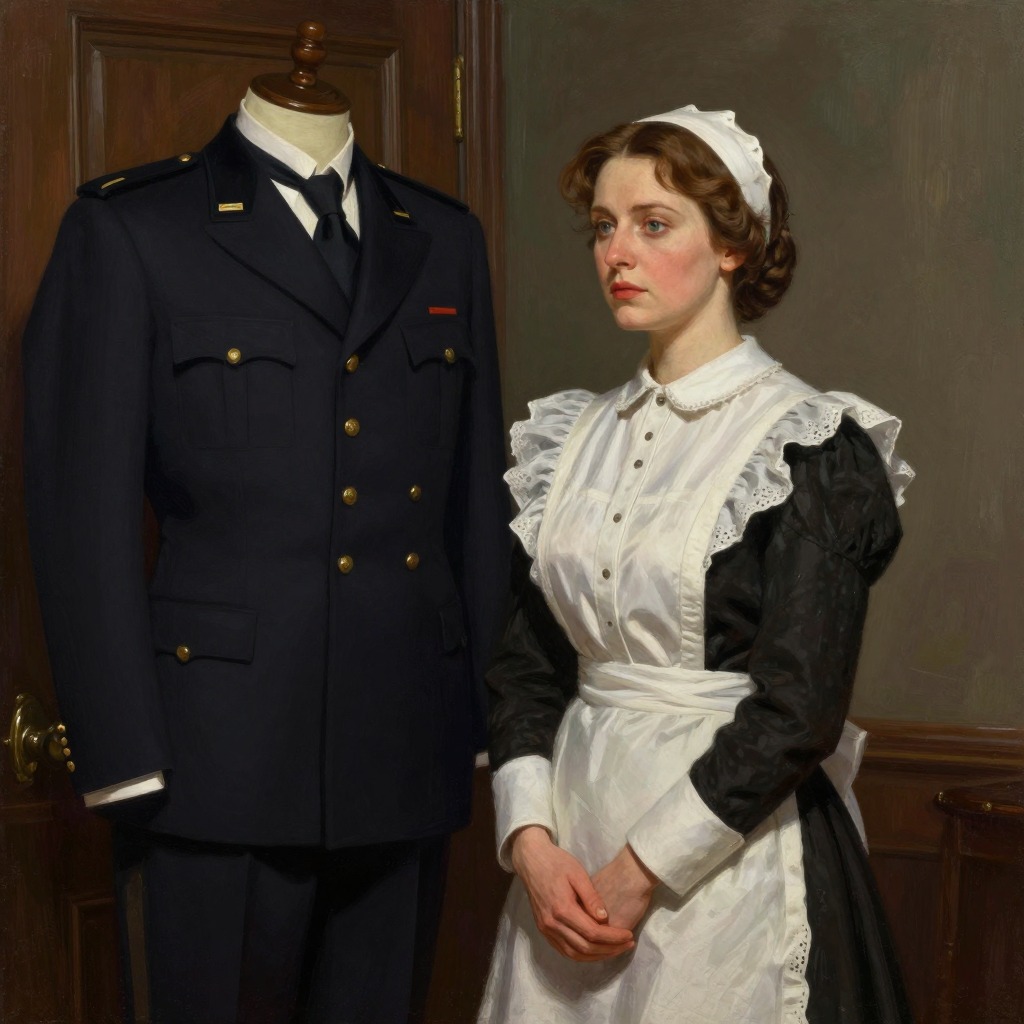
The conspirators' plan was thrown into disarray when the train became snowbound, trapping everyone on board. The murderer could no longer leave the train, and the uniform could not be disposed of as originally intended. Instead, it was hastily hidden. During the subsequent investigation, Poirot, suspecting the uniform would be found in a specific place, ordered a search of all passengers' luggage. In Hildegarde Schmidt's suitcase, the uniform was discovered, hastily rolled up and placed on top of her belongings. The discovery caused the German maid to cry out in protest, claiming she had never seen it before and that it had been placed there without her knowledge. Poirot, however, believed her, theorizing that the real culprit, having collided with Schmidt in the corridor, had used her open compartment to quickly discard the incriminating garment. The uniform also had a missing button, the third from the top, which was later found in Mrs. Hubbard's compartment, further linking the disguise to the crime scene.
Significance as Evidence and Symbol
The Wagon Lit Uniform functions as a powerful piece of evidence that, paradoxically, points toward the innocence of the real conductor, Pierre Michel, and the guilt of the passengers as a group. The fact that the uniform was found in Schmidt's luggage, rather than in a place that would directly incriminate a single person, suggested a coordinated effort to confuse the investigation. Poirot realized that the uniform was a red herring, a deliberate clue meant to support the fiction of an outside killer. Its presence on the train, combined with the button and the pass-key, formed a chain of evidence that, when viewed in isolation, seemed to confirm the existence of a mysterious intruder. However, for Poirot, the very neatness of this evidence—the way it so perfectly told a story—was what made him suspect it was a fabrication. The uniform thus becomes a symbol of the collective nature of the crime: it was not the tool of a single assassin, but a prop in a carefully staged drama involving all twelve passengers, each of whom had a personal stake in avenging the Armstrong family tragedy.